

Bal d'Afrique Absolu vs EDP: What Changes
Two Byredo Bal d'Afrique perfumes side by side: notes, concentration, size, season and who might start with which.

Bal d'Afrique Absolu vs EDP is mostly a question of strength and sweetness. The classic, Byredo Bal d'Afrique Eau de Parfum, opens with bergamot, marigold and blackcurrant, moves through violet and cyclamen and ends on cedarwood and vetiver. The Absolu keeps that frame, adds praline and black amber, and is the house's stronger concentration.

Bal d'Afrique Absolu vs EDP: the house's idea for each
Byredo Bal d'Afrique Absolu is the house's rework of its classic. Byredo says it adds a more gourmand intensity and sharpens the contrast between bright lightness and a deeper pull. The bottle is redesigned as well: the textured cap refers to Yakisugi, the Japanese art of charring wood, and the atomizer is silver and gold.

The Eau de Parfum tells a different story. The house presents it as a tribute to the lasting influence of African cultures on dance, art and music, and describes the scent as bright and juicy at the start, textured in the heart and soft on cedarwood and vetiver at the end. The Absolu takes that same outline in a sweeter, warmer direction.
Notes side by side
Here are the two pyramids as the house lists them.
- EDP top: South African buchu, African marigold, bergamot, blackcurrant.
- EDP heart: cyclamen, jasmine petals, violet.
- EDP base: tonka bean absolue, cedarwood, musks, vetiver.
- Absolu top: bergamot, black amber, blackcurrant, lemon.
- Absolu heart: musks, praline, violet.
- Absolu base: cedarwood, vetiver.
Read together, the lists show a shared core. Bergamot, blackcurrant, violet, cedarwood and vetiver appear in both, and so do musks, although in the Absolu they sit in the heart and in the Eau de Parfum in the base. The Absolu drops South African buchu, African marigold, cyclamen, jasmine petals and tonka bean absolue. What it adds is lemon, praline and black amber.
The effect is a shift of weight. Without buchu, marigold, cyclamen and jasmine petals, much of the green and floral side of the classic gives way, while lemon keeps the citrus opening sharp. Praline is usually a sweet, nutty note, and in the heart it gives the Absolu its gourmand character. The classic is not without sweetness either, since tonka bean is usually a soft, sweet note, but the Absolu moves the sweetness forward into the heart. The house lists black amber among the top notes but describes it as carrying the gourmand effect to the end, so it is more useful to treat it as a thread through the whole scent than as a single moment.
Concentration, size and season
The Eau de Parfum is the concentration of the classic. The Absolu is the house's own Absolu de Parfum, which it places above its Eau de Parfum in strength. We list both in 50 ml, and both carry the unisex label. A higher concentration usually means a denser, richer scent, and the sweet heart of the Absolu adds to that weight. A stronger concentration also calls for a lighter hand, so one or two sprays of the Absolu and two or three of the Eau de Parfum is a reasonable starting point. For what the concentration names mean in general, see our guide to perfume concentrations.
Our tags separate them clearly. The Eau de Parfum has moderate intensity, for daily and evening wear in spring, summer and autumn. The Absolu is tagged strong, for evenings and special occasions in autumn and winter, and it sits in our strong perfumes collection.
Bal d'Afrique Absolu or EDP: who might start with which
If you like a lively floral built on fruit, violet and wood, and want something that works across three seasons, the Eau de Parfum is the natural place to start. If you prefer sweet, gourmand perfume with a frame of citrus and wood, and you wear scent mostly in cooler months or in the evening, the Absolu matches that taste. Both begin with bergamot and blackcurrant, so the openings share their main notes. The difference arrives in the heart, where violet and musks meet praline in the Absolu. Gourmand perfumes in general are gathered in the gourmand collection.
The tags can settle a close call. For a warm summer day, only the Eau de Parfum carries a summer tag. For a winter evening or a special occasion, only the Absolu carries those tags. Autumn is the one season where both fit, and there the choice comes down to how sweet you want the perfume to be.
More Byredo perfumes with shared notes
Byredo Mojave Ghost shares violet, cedarwood, musks and vetiver with both Bal d'Afrique perfumes. With ambrette and naseberry on top and magnolia and sandalwood in the heart, it is the quieter, woodier option, and Mojave Ghost vs Bal d'Afrique compares it in detail. The house presents it as an ode to the Mojave Desert and to the few resilient flowers that bloom in its dry landscape, and in our range it is an Eau de Parfum in 100 ml.

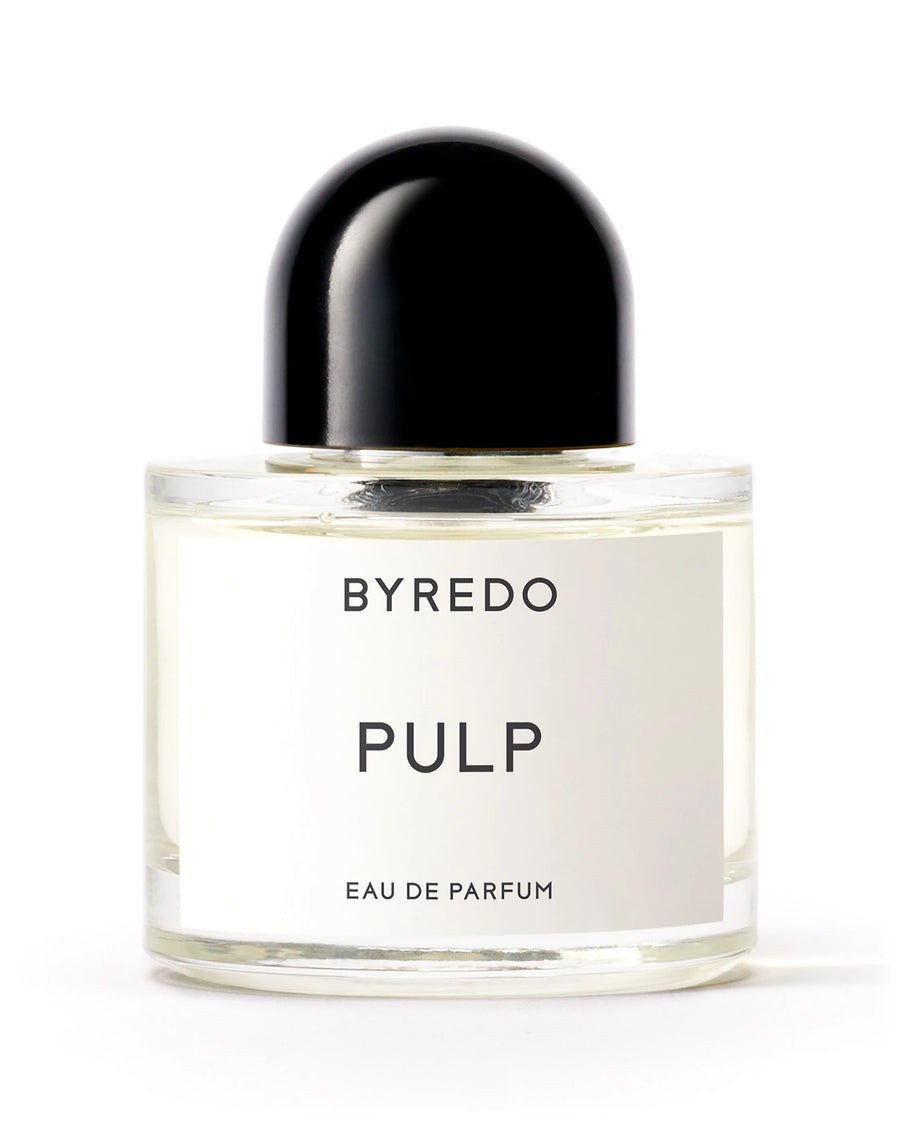
Byredo Pulp is the house's fruit-led scent. Bergamot, blackcurrant and cardamom open it, fig, red apple and tiare form the heart, and praline sits at the base, a note it shares with the Absolu, while cedarwood runs through all three. The house describes it as an international fruit basket, ripe and a little unruly, and in our range it is an Eau de Parfum in 50 ml.
Browse the whole house in the Byredo collection, or use our explore page to search by note and mood.
Frequently asked questions
Is Bal d'Afrique Absolu stronger than the EDP?
Yes, according to the house: Absolu de Parfum is its own concentration, placed above its Eau de Parfum. Our tags list the Absolu as strong and the Eau de Parfum as moderate.
What does Bal d'Afrique Absolu add to the EDP?
Lemon, praline and black amber, with the musks moving into the heart. It drops buchu, marigold, cyclamen, jasmine petals and tonka bean absolue, so the result reads sweeter and warmer.
Which seasons suit Bal d'Afrique Absolu and the EDP?
Our tags give the Eau de Parfum spring, summer and autumn, and the Absolu autumn and winter, with evenings and special occasions. Both open on bergamot and blackcurrant.


