

Diptyque Philosykos vs Orphéon: How They Differ
Diptyque Philosykos is a green fig Eau de Toilette, and Orphéon is a woody Eau de Parfum built on juniper berry, cedar, tonka bean and jasmine. Here is how the two differ, without a verdict.

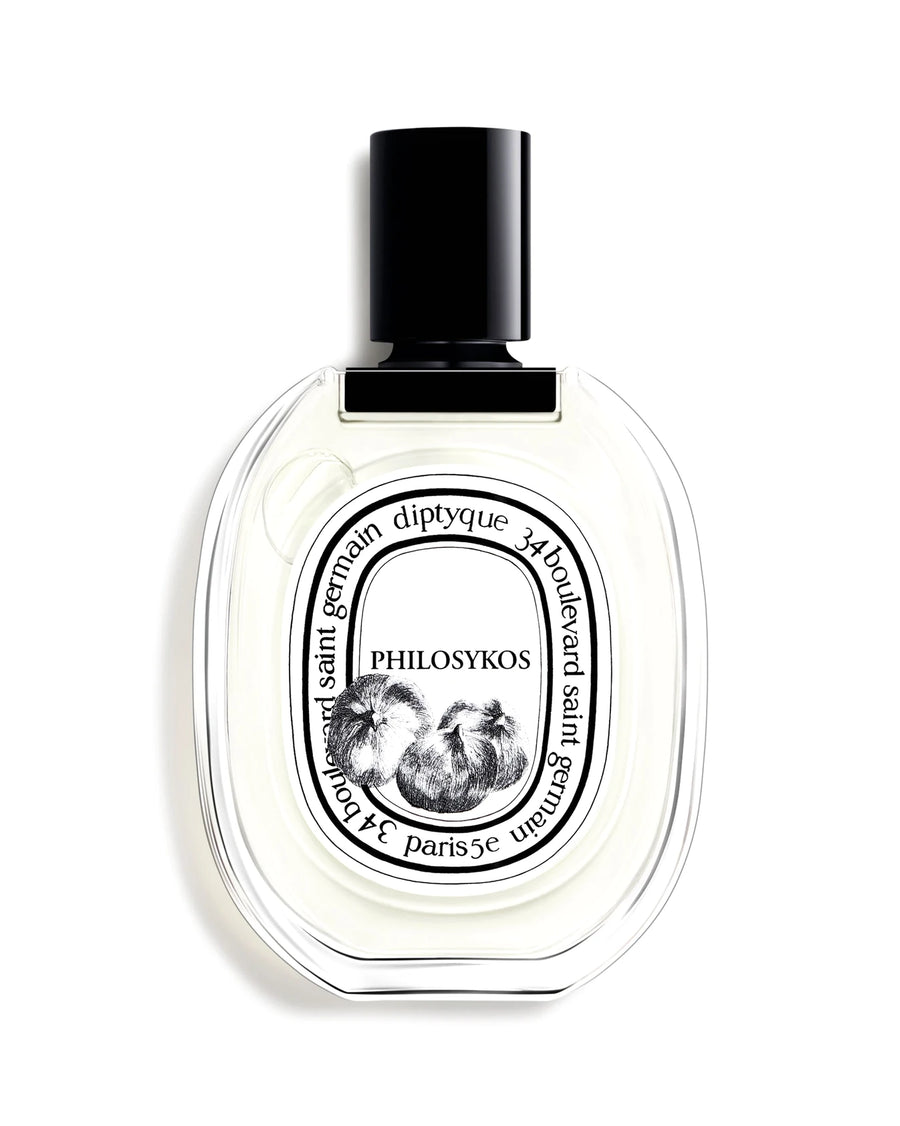
Diptyque Philosykos vs Orphéon is a comparison between a fig tree in summer and a smoky bar at night. Philosykos is an Eau de Toilette in 100 ml that lists fig leaves, fig tree sap, fig tree wood and black pepper. Orphéon is an Eau de Parfum in 75 ml that lists juniper berry, cedar, tonka bean and jasmine. Both are labelled woody and unisex, yet they are two different perfumes, not a lighter and a stronger version of one scent.
Diptyque Philosykos vs Orphéon: the idea behind each
Diptyque presents Philosykos as an ode to the whole fig tree and not to the fruit alone: the green freshness of the leaves, the milky flavour of the figs and the density of the white wood. The idea goes back to a Greek summer at Mount Pelion, where wild, sun-soaked fig trees had to be crossed on the way to the sea. The name means friend of the fig tree in Greek.
Orphéon starts from a different place: Saint-Germain in the early 1960s, all-night jazz clubs, and the three founders dancing and talking at a nearby bar called the Orphéon. The brand calls it an olfactory time capsule and gives it warmth from tonka bean, depth from cedar, richness from jasmine and vivacity from juniper berries. The notes are covered at more length in Diptyque Orphéon notes explained.

What the two have in common
Before the differences, the shared ground. Both come from Diptyque, which was founded in Paris in 1961 by three friends and calls 34 boulevard Saint-Germain its birthplace. Both carry the house's illustrated oval label with that address printed around it, both list exactly four notes, and both are filed under the woody family with a unisex label. The story of Orphéon is even set in the Saint-Germain of the house's own beginnings, while Philosykos looks away from Paris towards Greece.
The notes side by side
Neither perfume has a pyramid. Both give four notes in one flat list, so there are no top, heart and base tiers to compare, only the notes themselves.
- Philosykos. Fig leaves, fig tree sap, fig tree wood and black pepper.
- Orphéon. Juniper berry, cedar, tonka bean and jasmine.
The two lists share no note. Philosykos stays inside the fig tree: leaf, sap and wood, with black pepper as a dry edge, so it comes across as green, milky and woody. Orphéon pairs a dry berry and a clean wood with a soft, sweet bean and a rich white flower, so it comes across as warm, woody and a little floral. The word woody covers both, but in Philosykos it comes from fig tree wood and in Orphéon from cedar.
Eau de Toilette against Eau de Parfum
Philosykos is an Eau de Toilette and Orphéon is an Eau de Parfum, and that is part of the reason not to treat them as two strengths of one scent. An Eau de Parfum usually carries a higher share of perfume concentrate than an Eau de Toilette, which tends to give it more body, but here the compositions differ as well: other notes, another story and other season tags. Orphéon is not a stronger Philosykos, and Philosykos is not a diluted Orphéon. For a plain explanation of the two formats, see our guide to perfume concentrations.
Season, intensity and audience
- Philosykos. Light intensity, daily and office wear, spring and summer.
- Orphéon. Moderate intensity, evenings and special occasions, autumn and winter.
Both carry the unisex label, which comes from the house and our research and is not a rule. The tags point the same way as the formats: Philosykos is the daytime, warm-weather perfume of the two, and Orphéon is the evening, cool-weather one.
Choosing a starting point
Neither perfume outranks the other; the starting point depends on what you wear and when. If you like green, milky and woody scents, if you want something light for work or warm days, or if a fig scent built on leaf, sap and wood appeals to you, Philosykos is the natural starting point. If you prefer a warm, woody perfume with a floral richness and a story, or if you wear fragrance in the evening and in cold weather, Orphéon is the likelier choice. Nothing stops you from keeping both: one for spring and summer, one for autumn and winter.
Diptyque Philosykos vs Ilio and Do Son
Two other Eau de Toilette perfumes of the house are worth setting next to Philosykos, because they share its format. Ilio is an Eau de Toilette in 100 ml like Philosykos, with a light intensity and spring and summer tags. Its notes are prickly pear, bergamot, jasmine and iris, so it is citrus and floral where Philosykos is green and woody.
Do Son has the same format, with tuberose, orange blossom, jasmine and a marine accord, and a moderate intensity. It adds white flowers and sea air to the same warm-weather picture, which makes it the floral counterpart to Philosykos.
If you like these, look here next
Two more perfumes of the house, both Eau de Parfum, echo notes from the pair. Fleur de Peau lists musk, iris, ambrette and pink peppercorn, a soft skin scent with a pepper among its notes as Philosykos has, and with daily and spring or autumn tags.

Eau Duelle lists vanilla, pink peppercorn, cypriol and incense. It is labelled strong, with evening, autumn and winter tags, which makes it the richer, spicier neighbour of Orphéon.

The whole range sits in the Diptyque collection, and you can follow one format in the Eau de Parfum collection. The Explore page sorts perfumes by note, scent family and season.
Frequently asked questions
What is the difference between Diptyque Philosykos and Orphéon?
Philosykos is a green fig Eau de Toilette with a light intensity. Orphéon is a woody Eau de Parfum of moderate intensity with a floral side. They share no listed notes.
Is Diptyque Philosykos an Eau de Toilette and Orphéon an Eau de Parfum?
We list Philosykos as an Eau de Toilette in 100 ml and Orphéon as an Eau de Parfum in 75 ml. They are different perfumes, not two strengths of one.
Which suits summer, Diptyque Philosykos or Orphéon?
By our tags, Philosykos fits spring and summer, with a light intensity. Orphéon fits autumn, winter and evenings. The tags are a guide, not a rule, and the choice is one of taste.


