

Diptyque: a guide to the house and its perfumes
Diptyque is a Paris house, founded in 1961 by three friends at 34 boulevard Saint-Germain, whose perfumes start from places, plants and memories. This guide covers the ten Diptyque perfumes we list, each with the four main notes the brand names for it.

Diptyque was founded in Paris in 1961 by three friends, Desmond Knox-Leet, Christiane Gautrot and Yves Coueslant. The first chapter was written at 34 boulevard Saint-Germain, which the brand calls its birthplace, and it began as a boutique before there was any fragrance. The ten perfumes we list are gathered in the Diptyque collection.
What the house stands for
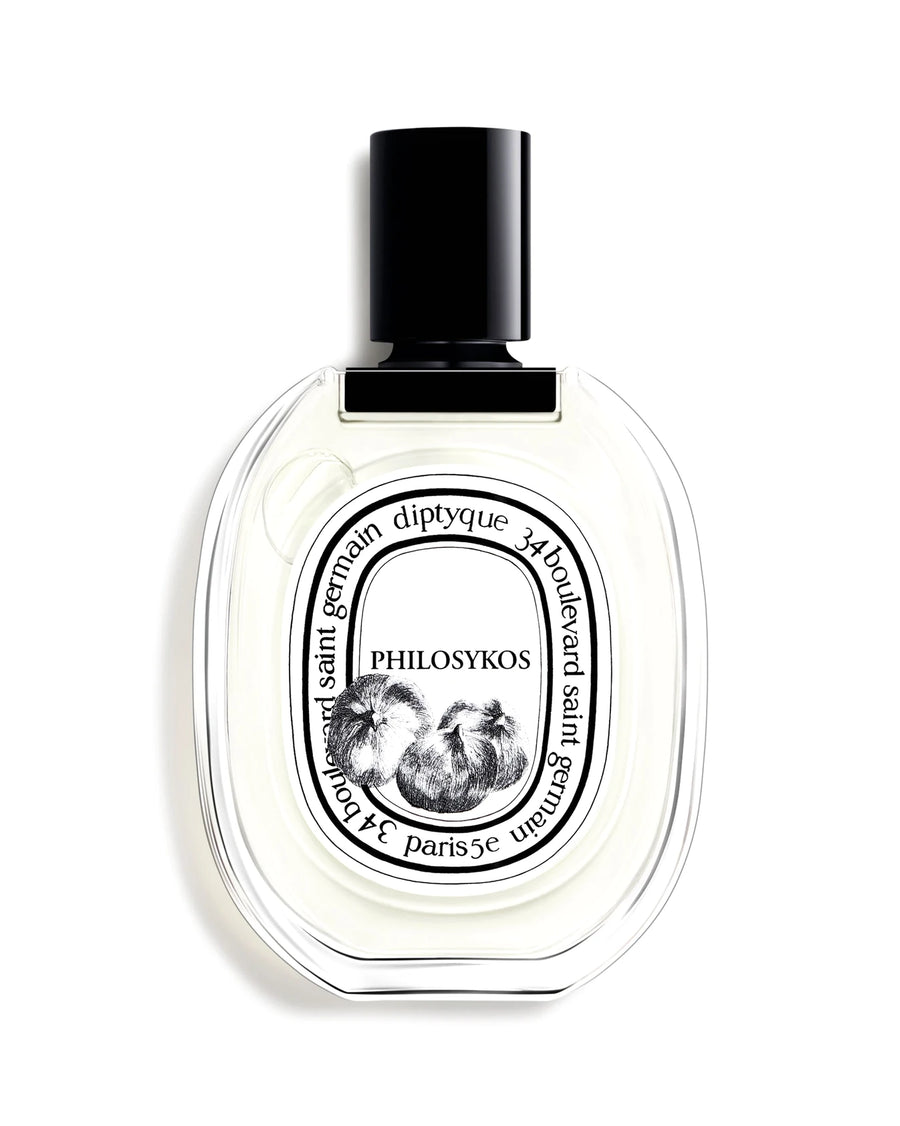
The brand tells its story as that of three friends and artists drawn to nature, travel and art, and many of its perfumes start from a place or a memory: a fig grove in Greece, a Parisian bar, the Vietnam of Yves Coueslant's childhood. Every perfume carries an illustrated oval label with the boulevard Saint-Germain address printed around it. Diptyque says all its fragrances are made in France. Bottles can be refilled in certain Diptyque stores, a service the brand says covers fifteen of its eaux de toilette and eaux de parfum.
What the perfumes have in common
Seven of our ten are Eau de Toilette in 100 ml and three are Eau de Parfum in 75 ml. Diptyque does not publish a pyramid. Each product page names four main notes in one flat list, and that is how we give them, without a top, heart or base that the brand does not state. The brand's pages name no perfumer and, with one exception, no launch year, so this guide leaves those out. If you are choosing from a description alone, our guide to choosing a perfume without smelling it may help, and the piece on concentrations explains Eau de Toilette and Eau de Parfum.
The perfumes we list
The order follows Parfumo rating counts, highest first. The counts come from snapshots taken between September 2025 and June 2026, not from a single day, so treat the order as a rough guide; Philosykos has the highest count, with Orphéon close behind. Our research has no Fragrantica counts for Diptyque.
Philosykos
An ode to the whole fig tree, not just the fruit: the green freshness of the leaves, the milky flavour of the figs and the density of the white wood. The four notes are fig leaves, fig tree sap, fig tree wood and black pepper. The scent goes back to a Greek summer at Mount Pelion, where a grove of wild, sun-soaked fig trees had to be crossed to reach the sea, and the name means friend of the fig tree in Greek.
Orphéon
Saint-Germain in the early 1960s, all-night jazz clubs, and the three founders dancing and talking at the nearby Orphéon, a Parisian bar of the past. The brand calls it an olfactory time capsule and names juniper berry, cedar, tonka bean and jasmine. Its story also speaks of curls of tobacco smoke and the powder of vintage cosmetics; those are images, not listed notes.

Fleur de Peau
A skin scent drawn from the myth of Eros and Psyche, which the brand links to the founders' fascination with Greek legends. Musk is the centre, described as cottony, light, soft and moist, and iris, ambrette and pink peppercorn lift it.

Eau Duelle
An ode to travel and to vanilla. Along the spice route, the Bourbon vanilla from Madagascar moves between darkness and light and takes on the dark, smoky nuances of cypriol. The notes are vanilla, pink peppercorn, cypriol and incense, and the brand says that in the Eau de Parfum the vanilla keeps its duality but shows a spicier, denser side.

Tam Dao
A memory from the holy forests of Vietnam: the velvety, milky scent of sandalwood burned in temples, which Yves Coueslant never forgot from his childhood. The list reads sandalwood, cedar, cypress and myrtle.

Eau des Sens
The idea is to bring every part of the bitter orange tree, the bigarade, into one scent: branches, leaves and fruit. The four notes are orange blossom, angelica root, patchouli and juniper berry. The illustration on the back of the label draws on Op Art, a movement as old as the house itself.

Do Son
Named after the seaside place on Halong Bay where Yves Coueslant spent his childhood summers, when the sea breeze carried the heady, spicy scent of tuberoses. The brand describes a tuberose carried on sea spray and lists tuberose, orange blossom, jasmine and a marine accord.
L'Ombre dans l'Eau
A daydream: a calm river and a summer nap under a weeping willow. Roses and blackcurrant are gathered into one perfume, with rose, blackcurrant buds, petitgrain and blackcurrant leaves as its notes: floral intensity, tart fruit and herbaceous green. The brand dates it to 1983 and counts it among its very first floral-fruity fragrances.
Eau Rose
An infusion of the whole rose: petals, green leaves, thorns, stem and buds, steeped slowly in clear water until the rosy delicacy, the fruity accents and the sharp greenery come out. The notes are Damascena rose, Centifolia rose, a litchi accord and Ambroxan.
Ilio
The name comes from the Greek word for sun. Ilio is a tribute to the Mediterranean in summer, with colourful beach umbrellas and green prickly pear trees, and its notes are prickly pear, bergamot, jasmine and iris. It has the fewest Parfumo ratings of the ten, yet the brand lists it among its best sellers.
Where to start
- Green and woody: Philosykos for the fig tree, Tam Dao for sandalwood, cedar and cypress.
- Flowers: Do Son for tuberose, Eau Rose and L'Ombre dans l'Eau for rose, the second with blackcurrant.
- Soft and close to the skin: Fleur de Peau, built around musk and iris.
- Warmer: Eau Duelle for vanilla and incense, Orphéon for tonka bean, cedar and juniper berry.
- Bright and summery: Eau des Sens for orange blossom, Ilio for prickly pear and bergamot.
Every other house in our range has its own entry on the brands page.
Frequently asked questions
Does Diptyque give top, heart and base notes?
No. Each product page names four main notes in one flat list. We give them in that form.
Which Diptyque perfumes come from Yves Coueslant's memories of Vietnam?
Two of the ten. Tam Dao recalls the sandalwood burned in temples, and Do Son is named after the place on Halong Bay where the sea breeze carried the scent of tuberoses.
What does the address on the label mean?
The oval label carries 34 boulevard Saint-Germain, the Paris address where the house wrote its first chapter in 1961 and which the brand calls its birthplace.


