Zoologist: a guide to the house and its perfumes
Zoologist is a Toronto house, founded in 2013 by Victor Wong, that names every perfume after an animal. This guide covers the ten Zoologist perfumes we list, with their notes, perfumers and the animal behind each.

Zoologist Perfumes was founded in 2013 by Victor Wong and is a Canadian company based in Toronto. The brand describes itself as an award-winning Canadian niche perfume house that names its perfumes after animals. You will find all ten we list in the Zoologist collection. If the term is new to you, what niche perfume is is a good first read.
What the house stands for
Every perfume is made with a different named perfumer, printed on the product page and on the box. The brand calls the range creative, artistic and strong rather than mass-appeal. It says that apart from Bee, which contains beeswax, and Hyrax, its perfumes are free of animal products, and that every animal musk or civet in an ingredient list is synthetic and marked with an asterisk.
What the perfumes have in common
All ten are Extrait de Parfum in 60 ml bottles, and the brand's product pages give concentrations between 18 and 25 percent. Beyond that the styles run wide, from honey and carrot cake to charred wood and polar air. Each perfume starts from the animal and its world: a hive, a deep sea, a scorched landscape, a night meadow. For what the concentration name means, see our guide to perfume concentrations.
The perfumes we list
Most rated on Parfumo first, as counted in early October 2026.
Bee
The hive in full spring bloom, with workers racing through a flowering meadow to serve their queen. Orange, ginger syrup and a royal jelly accord open it, broom, heliotrope, mimosa and orange flower form the heart, and benzoin, labdanum, musks, sandalwood, tonka and vanilla the base. Perfumer Cristiano Canali; the most rated Zoologist on Parfumo.

Squid
The deep sea, from squid escaping predators in clouds of ink to lumps of ambergris washing ashore. Pink pepper, solar salicylate and incense open it, a black ink accord, a salty accord and opoponax form the heart, and ambergris, benzoin and musk the base. By Céline Barel.

Tyrannosaurus Rex
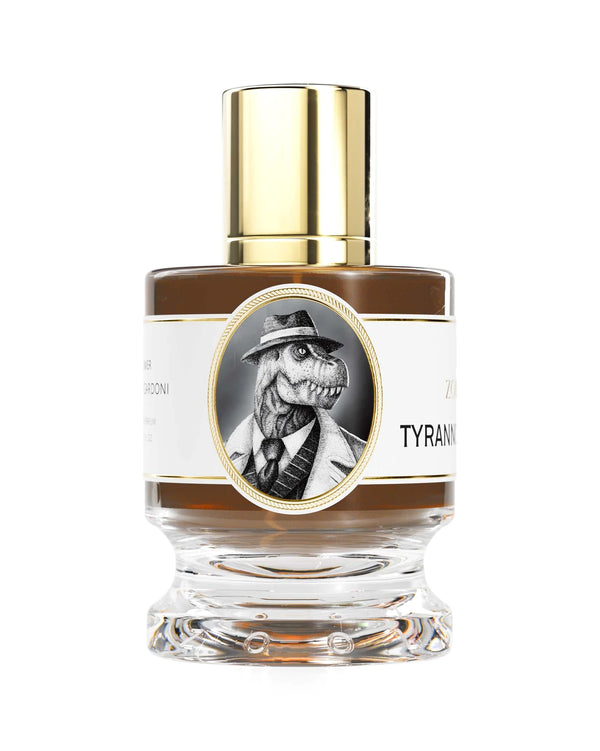
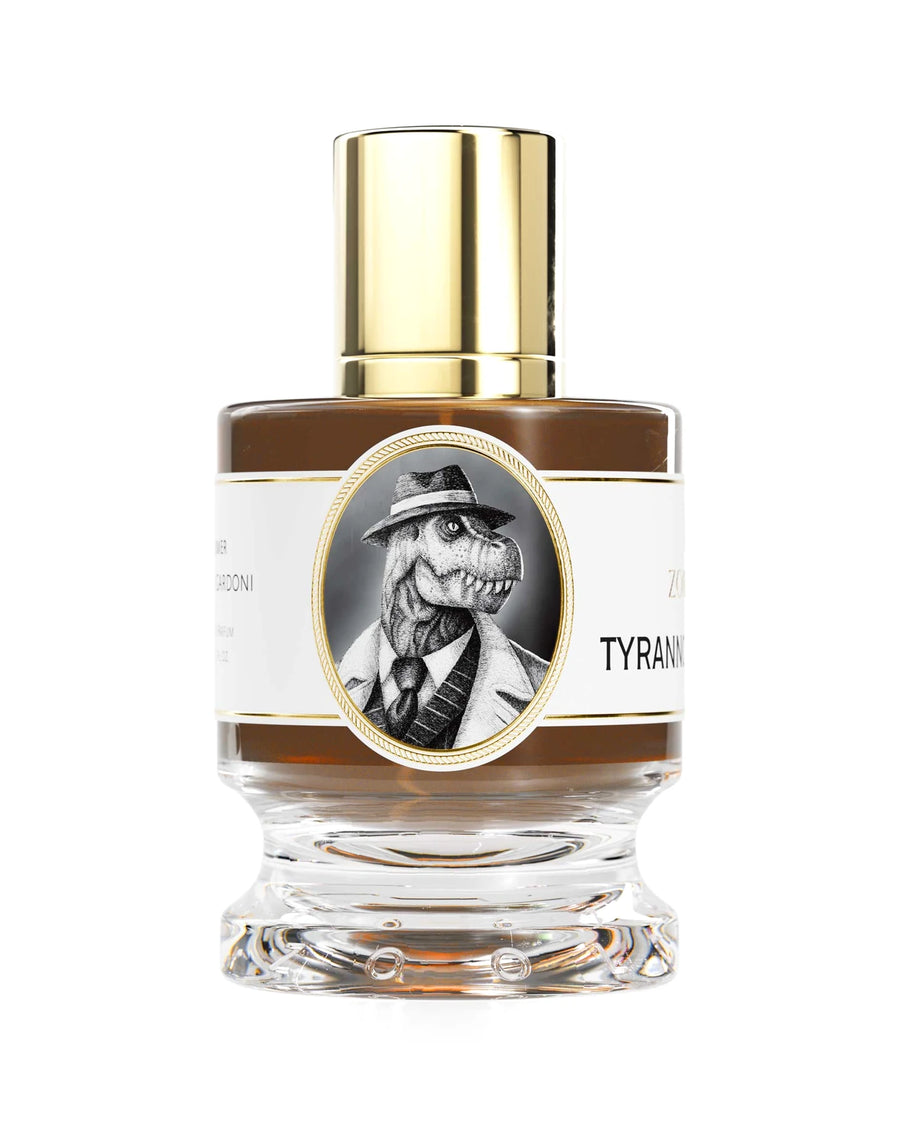
A scorched Cretaceous landscape of wildfire and lightning. Bergamot, black pepper, fir and nutmeg open it, champaca, jasmine, osmanthus and rose make the heart, and resins, cade, cedar, leather and sandalwood form the base. The brand describes smoky charred wood and a chill of metallic rose oxide. By Antonio Gardoni.
Camel
A camel crossing an endless desert with treasures for a far-off marketplace. Dried fruits, frankincense, palm date and rose open it, amber, cinnamon, incense, jasmine and myrrh form the heart, and oud, sandalwood, tonka bean, vanilla and vetiver sit beside civet and musk, which the brand marks as synthetic. By Christian Carbonnel.

Moth
The night-flying insect that cannot resist a flame. A rich opening of dark spices, black pepper, cinnamon, clove, cumin and saffron, settles into honeyed rose and powdery florals, then drifts into nagarmotha, guaiac wood, oud and patchouli over smoke. By Tomoo Inaba.

Hummingbird
The world seen by a hummingbird: nectar-rich flowers, then a nest lined with lichen and moss. A pastel bouquet of honeysuckle, mimosa, lilac and peony meets apple, cherry, plum and honey, with a velvety whipped-cream accent. By Shelley Waddington.

Cow
Green pastures, a newborn calf taking its first steps and its mother's warm milk. Sage and apple open it, milk, lily of the valley, heliotrope, violet and jasmine form the heart, and cedarwood, vetiver, benzoin, musks and amber the base. By Nathalie Feisthauer.
Harvest Mouse
Harvest time in the countryside: golden wheat, autumn wind and tiny mice gathering seeds before nightfall. Bergamot, cloves, Roman chamomile and orange blossom open it, davana, hay absolute, resins and a rich beer extract form the heart, and fir balsam, oak moss, cedarwood, sandalwood and vanilla the base. By Luca Maffei.
Rabbit
Instead of a prose story, the brand's page carries a sonnet by the poet Jehanne Dubrow about rabbits in a night meadow. The scent follows that imagery with green leaves, carrot, clover, hay, white almond and a biscuit accord, and the brand's tagline is carrot cake garnished with dry hay. By Fanny Bal.
Penguin
Emperor penguins enduring an Antarctic storm while the male guards the egg. Antarctic air, an ice accord and juniper berry open it, pink pepper, saffron and cistus absolute follow, and sandalwood, musks, sea moss and suede remain. The brand calls it invigorating. By Chiaki Nomura.
Where to start
- Sweet and edible: Bee for honey, Rabbit for carrot cake, Hummingbird for fruit and cream, Harvest Mouse for hay, beer and resins.
- Fresh and soft: Cow with milk and apple, Penguin with polar air and suede.
- Dark, spicy and smoky: Moth and Tyrannosaurus Rex.
- Oriental and resinous: Camel.
- Salty and deep: Squid.
Other houses are on our brands page.
Frequently asked questions
Are Zoologist perfumes free of animal products?
The brand says they are, apart from Bee, which contains beeswax, and Hyrax. It also says every animal musk or civet in an ingredient list is synthetic and marked with an asterisk.
Which concentration is Zoologist?
The 60 ml bottles are Extrait de Parfum, and the brand's product pages give concentrations between 18 and 25 percent.
Does the colour of the juice change over time?
The brand says Squid, Moth and Camel contain colourants that fade slowly or change colour over time.